
In Season Right Now
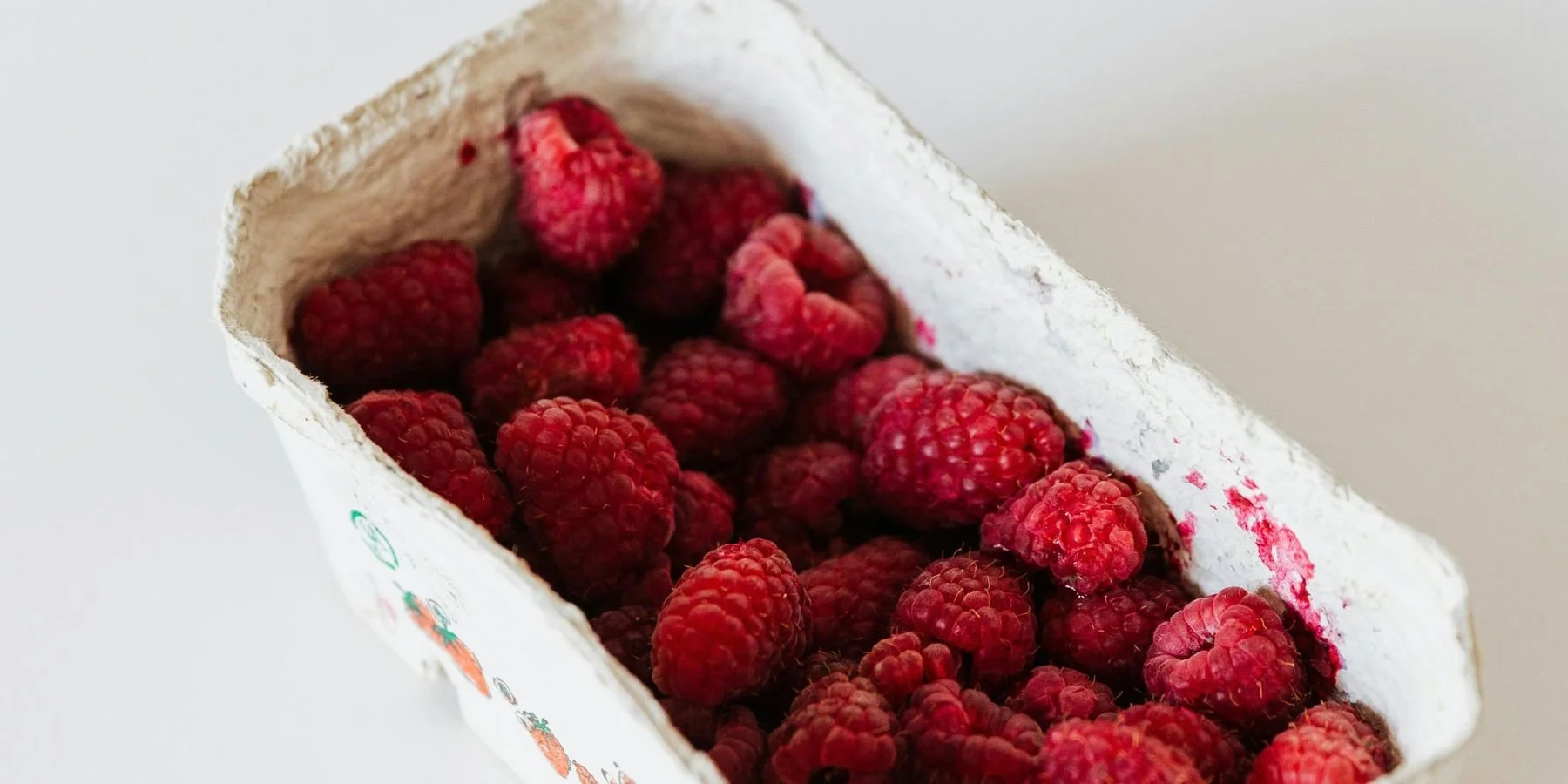
Why raspberries are one of the most powerful foods you can eat this summer: for your blood sugar, your gut, and your cells
There is something about eating what is in season that the body just knows.
Not as a philosophical concept, but as a physical reality. When you eat fruit that has ripened in the sun at its natural pace and arrived on your plate at the moment it was designed to be eaten, something in your biology recognises it. The flavour is different. The nutrient density is different. The body responds differently.
Right now, if you are in Virginia and across much of the South, raspberries are coming into peak season. And I want to tell you why this small, unassuming berry deserves a dedicated place in your summer eating.
The case for seasonal eating
Before we get into raspberries specifically, I want to say something about why eating seasonally matters in a way that goes beyond preference or philosophy.
Our bodies evolved in an environment where food arrived in waves. Certain nutrients were abundant in summer, others in autumn and winter. The body became extraordinarily good at using seasonal abundance, storing some of what came in, and shifting metabolic gears when the abundance changed.
When we eat the same foods year round, shipped from wherever they happen to be in season at any given moment, we lose the rhythm that our biology was built for. The microbiome, the hormone cycles, the metabolic shifts that were designed to respond to seasonal variety, all of them become flatter and less responsive.
Eating with the season, even imperfectly, even partially, is one of the most accessible and most underrated things you can do for your overall health. And right now, the season is handing us something genuinely extraordinary.
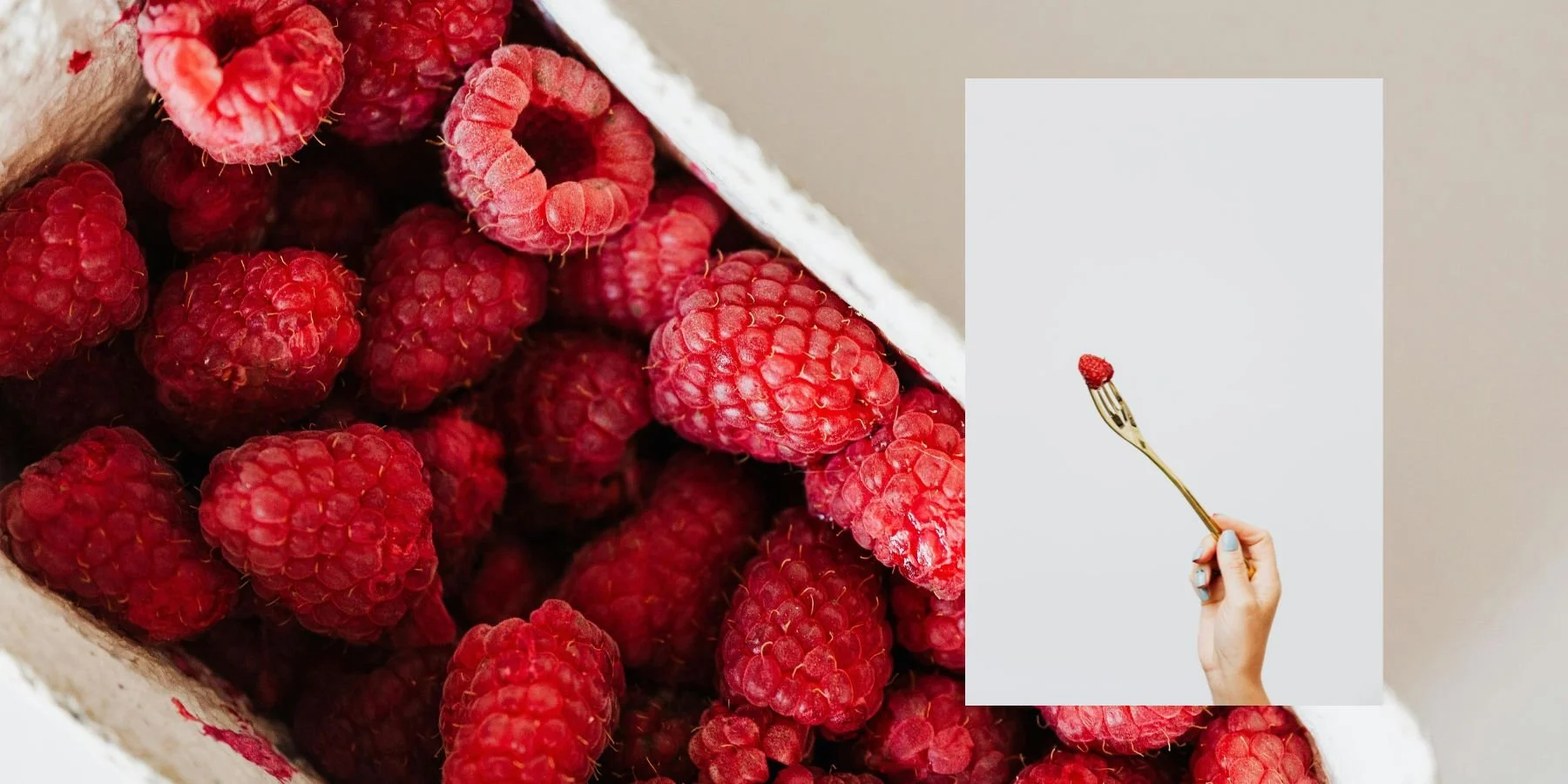
What raspberries actually do
A cup of fresh raspberries contains eight grams of fiber. To put that in context, most adults eat less than half the fiber their body needs each day. Eight grams from a single cup of berries is significant.
But the type of fiber matters as much as the quantity. Raspberries are particularly rich in soluble fiber, including pectin, which forms a gel-like substance in the digestive tract. That gel slows the absorption of glucose into the bloodstream. Not a little. Measurably and significantly.
What this means in practice is that when you eat raspberries, or include them in a meal, the glucose from that meal enters your blood more slowly.
The insulin response is smaller.
The energy spike and crash cycle is softened.
You feel more even, more sustained, more clear-headed for longer.
For anyone managing blood sugar, managing weight, dealing with afternoon energy crashes, or simply wanting to eat in a way that supports metabolic health, this matters enormously. And it is available right now, in season, from a handful of berries.
The polyphenols in raspberries, particularly ellagic acid and anthocyanins, the pigments that give them their colour, have been extensively studied for their anti-inflammatory and antioxidant activity. They protect cells from oxidative damage. They support the integrity of the gut lining. They have been shown to have specific protective effects on the cardiovascular system and in reducing the inflammatory markers associated with chronic disease.
And then there is what they do for the gut microbiome specifically, which is where the story becomes most interesting of all.
☀️ The Sunshine Pathway
Gut health, energy, detox, and vibrance — from the inside out
This pathway is for anyone who wants to feel genuinely well. Digestion that works, energy that holds, and a body that feels clear, bright, and like yours again.
Bloating, gas, or digestive discomfort that won't fully resolve
Low or inconsistent energy despite eating well
Liver or detox burden, heavy metal accumulation
Skin, mood, or hormone patterns connected to the gut

Dr. B and the fiber revolution
Dr. Will Bulsiewicz, known as Dr. B, is a triple board-certified gastroenterologist and the author of the New York Times bestseller Fiber Fueled. He is one of the most compelling voices in medicine right now on the relationship between fiber, the gut microbiome, and whole-body health. And he is passionate about raspberries specifically.
His central argument, backed by extensive research, is that the diversity and health of your gut microbiome is one of the most powerful predictors of your overall health: your metabolic health, your immune function, your mood, your cognitive clarity, and your long-term risk of chronic disease. And the single most impactful thing you can do for your microbiome is feed it diverse, high-quality plant fiber.

As Dr. B puts it: your microbiome predicts your blood sugar more so than your waist circumference does. The gut bacteria that thrive on fiber produce short-chain fatty acids, particularly butyrate, which directly support the gut lining, reduce systemic inflammation, and regulate insulin sensitivity throughout the body. The fiber in raspberries feeds exactly these bacteria.
I recommend watching Dr. B's work directly. His YouTube channel and his books are some of the most accessible and well-researched gut health content available:
Dr. B discusses fiber, microbiome, and blood sugar:
What one cup of raspberries gives you
This is not a supplement. It is food. And the numbers behind it are genuinely remarkable — especially for blood sugar, gut health, and cellular protection.
8g fiber
One of the highest fiber contents of any fruit. More than most adults eat in an entire meal.
Slows glucose absorption significantlyBlood sugar
Soluble fiber forms a gel in the gut that measurably slows glucose entry into the bloodstream.
Smaller insulin response, more even energyPrebiotic fiber
Feeds the specific gut bacteria that produce butyrate — the short-chain fatty acid that protects the gut lining and reduces systemic inflammation.
Direct microbiome benefitPolyphenols
Ellagic acid and anthocyanins protect cells from oxidative damage and support the cardiovascular system and gut lining integrity.
Anti-inflammatory, cellular protectiveVirginia berry season — eat through all of them
Strawberries
First berry of the season. Rich in vitamin C and ellagic acid. Buy local if you can — they travel poorly and flavour drops fast.
Blueberries
Peak cognitive health berry. Anthocyanins cross the blood-brain barrier and have been shown to improve memory and processing speed.
Raspberries — peak season NOW
The fiber champion. Blood sugar stabilising, gut nourishing, anti-inflammatory. Best eaten fresh, local, and organic where possible.
Blackberries
High vitamin K and ellagitannins. The gut converts these into urolithins — compounds studied for cellular energy and longevity.
"Eating through the berry season gives your body a rotating supply of different polyphenols, different fiber profiles, and different micronutrients. Your microbiome responds to that diversity. Your cells respond to that diversity. This is what eating with the season looks like in practice."
The berry season ahead
Raspberries are the beginning, not the end. Here is what the Virginia berry season looks like across the coming weeks and months, and why each one is worth eating with intention:
Strawberries come first, typically peaking in late May and into June. Lower in fiber than raspberries but rich in vitamin C and ellagic acid, and the first fresh, local berry of the season.
Blueberries peak in June and July. The most extensively studied berry for cognitive health, with anthocyanin concentrations that cross the blood-brain barrier and have been shown in multiple studies to improve memory, processing speed, and mood. One of the highest antioxidant density foods available.
Raspberries peak now, in June into early July in Virginia. The fiber champion of the berry world. Blood sugar stabilising, gut microbiome nourishing, and extraordinarily versatile.
Blackberries follow in July and into August. Similar fiber content to raspberries, with particularly high vitamin K and manganese content. One of the most abundant sources of ellagitannins, which the gut converts into urolithins, compounds being actively studied for their role in cellular energy production and longevity.
Eating through the berry season, choosing what is local and ripe and abundant at each stage, gives your body a rotating supply of different polyphenols, different fiber profiles, and different micronutrient concentrations. Your microbiome responds to that diversity. Your cells respond to that diversity.
This is what eating with the season looks like in practice.
Dr. B with Rich Roll on the microbiome:
Dr. B's Instagram @theguthealthmd: https://www.instagram.com/theguthealthmd/
The simplest ways to use them
Raspberries do not need to be complicated. In fact, the less you do to them, the more their benefits are preserved.
Eat them fresh, at room temperature, on their own. This is the simplest and most direct way to let the fiber and polyphenols work.
Add them to yoghurt or kefir in the morning. The combination of the prebiotic fiber from the raspberries and the probiotic cultures in the yoghurt or kefir creates a synergistic gut health effect that is greater than either alone.

Blend them into a smoothie with leafy greens, flaxseed, and a protein source. The fiber and the fat slow the absorption of everything else in the blend, giving you a genuinely sustained energy meal rather than a sugar spike.
Make them into a simple sauce with no added sugar, just fresh raspberries warmed gently in a pan until they release their juices, and use it over grain, pancakes, or with plain cheese. The warmth does not significantly reduce their polyphenol content and the natural sweetness is concentrated and satisfying.
Freeze them. When peak season is over, frozen raspberries retain almost all of the nutritional value of fresh ones. Freeze a bag now and you have access to summer's fiber and antioxidant load through autumn and winter.
A note on buying
When it comes to berries, organic matters more than with most produce. Conventionally grown raspberries and strawberries consistently appear on the Environmental Working Group's Dirty Dozen list, meaning they carry some of the highest pesticide residues of any fruit or vegetable. If you can access local, organic, or spray-free berries from a farmers market or pick-your-own farm in your area, this is worth the extra effort for summer berries especially.
In Virginia, raspberry picking season is here right now. There is no better version of this food than the one you pick yourself, ripe from the cane, warm from the sun, and eaten on the way back to the car.
Eat what is in season. Your body knows what to do with it.
"Eat what is in season. Your body was designed for this rhythm — the rotating abundance of summer berries is one of the most generous and accessible health tools available to us. And it is here right now."
Melody recommends — Dr. B's books
Want to eat in a way your body actually responds to?
Book a consultation with Melody and get a nutritional approach tailored to your whole health picture — not a generic diet plan.
TO BOOK A CONSULTATION
Fix Your Gut Naturally — Dr. B on fiber maxing: https://www.youtube.com/watch?
"Eat what is in season. Your body was designed for this rhythm — the rotating abundance of summer berries is one of the most generous and accessible health tools available to us. And it is here right now."
Melody recommends — Dr. B's books
Recommended for you, that you might enjoy:


Sources and Further Reading
Bulsiewicz W. Fiber Fueled: The Plant-Based Gut Health Program for Losing Weight, Restoring Your Health, and Optimizing Your Microbiome. Avery, 2020. New York Times bestseller.
Bulsiewicz W. The Fiber Fueled Cookbook. Avery, 2022.
Bulsiewicz W. Plant Powered Plus: Activate the Power of Your Gut to Tame Inflammation and Reclaim Your Health. Avery, 2026.
Jakobsdottir G, Jadert C, Holm L, Nyman ME. Propionic and butyric acids, formed in the caecum of rats fed highly fermentable dietary fibre, are reflected in portal and aortic serum. British Journal of Nutrition. 2013; 110(9): 1565–1572. On short-chain fatty acid production from dietary fiber and systemic effects.
Basu A, Rhone M, Lyons TJ. Berries: emerging impact on cardiovascular health. Nutrition Reviews. 2010; 68(3): 168–177. Review of berry polyphenols and cardiovascular and metabolic health effects.
Environmental Working Group. EWG's 2025 Shopper's Guide to Pesticides in Produce. ewg.org/foodnews/dirty-dozen.php Berries consistently among highest pesticide residue produce.

☀️ The Sunshine Pathway
Gut health, energy, detox, and vibrance — from the inside out
This pathway is for anyone who wants to feel genuinely well. Digestion that works, energy that holds, and a body that feels clear, bright, and like yours again.
Bloating, gas, or digestive discomfort that won't fully resolve
Low or inconsistent energy despite eating well
Liver or detox burden, heavy metal accumulation
Skin, mood, or hormone patterns connected to the gut
Raspberries are at peak season in Virginia right now. One cup delivers eight grams of fiber that measurably slows blood sugar spikes, feeds your gut microbiome, and protects your cells from oxidative damage. Melody Thomas explains why eating what is in season is one of the most underrated health strategies available, what the science says about raspberries specifically, and which berries are coming next.