Sitting -What is it doing to you?
WHAT SITTING IS DOING TO YOUR BODY The clinical truth about prolonged sitting, tissue decay, and why the body Melody has been treating for twenty years is increasingly the body of someone who never moves
David's Story — And Why It Is Probably Yours Too
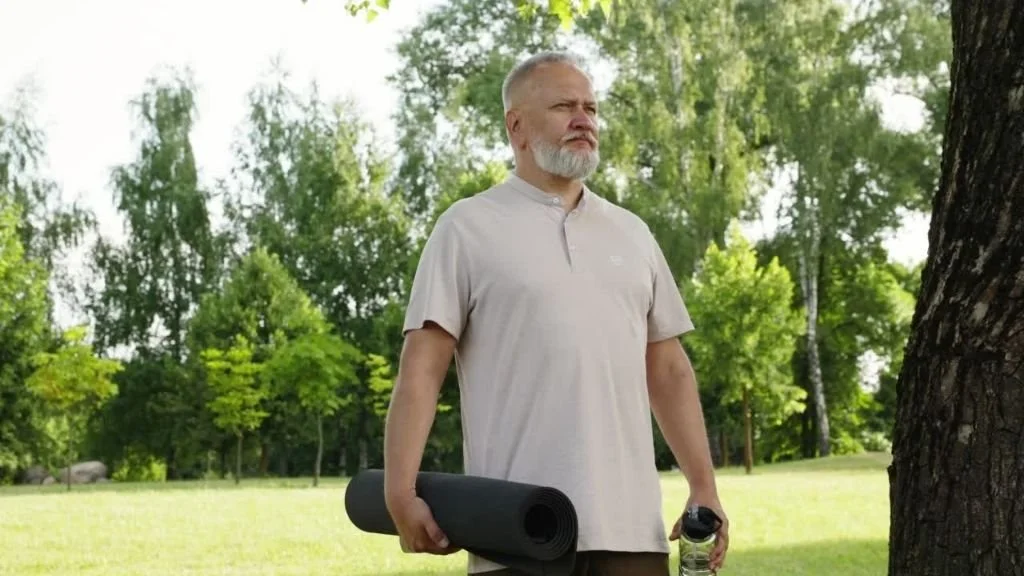
David came to see me at 52 with a posture his wife described as a question mark. Twenty-five years at a desk. A career he was proud of, a life he had built, and a body that had quietly been remodeling itself around the shape of a chair for the better part of three decades.
He was not in acute crisis. He had never had a disc herniation. He had never been in an accident. He had never done anything dramatic to injure himself. He had simply sat. Every day. For hours. In the same position. And his body had done exactly what tissue does when it is held in a sustained position without adequate movement to interrupt the pattern, it adapted. It remodeled. It built itself around the demands being placed on it, because that is what the body is exquisitely designed to do.
The problem is that the demands of a desk chair are not the demands the human body was designed for. And when the body adapts to them , over years, over decades, the result is a structural and physiological picture that most people have normalized so completely they have stopped recognizing it as a problem.
This post is about what that picture actually looks like on the inside. Not the postural aesthetics. The tissue, the nerve, the organ, the cellular reality of what sustained sitting does to the human body over time.

The Spine Under Sustained Compression
The human spine is an extraordinary structure, thirty-three vertebrae, twenty-three intervertebral discs, a complex system of ligaments, muscles, and fascia designed to distribute load efficiently across its entire length through movement, compression, decompression, and rotation. It is designed to move. Constantly, variably, and in multiple planes. That movement is not optional for spinal health. It is the mechanism by which the intervertebral discs, which have no direct blood supply, receive the nutrients they need to remain hydrated, pliable, and functional.
The disc is essentially a hydraulic shock absorber. Its outer ring, the annulus fibrosus, contains a gel-like nucleus that absorbs compressive load and distributes it across the disc surface. When the spine moves, the nucleus is compressed and decompressed rhythmically, drawing in nutrient-rich fluid during the decompression phase and expelling waste products during the compression phase. This is the only mechanism by which the disc receives nutrition. There are no blood vessels delivering nutrients directly to the disc tissue.
When you sit for sustained periods without meaningful movement, this pump mechanism stops. The disc remains under sustained compressive load. Nutrients stop being drawn in. Waste products stop being expelled. The nucleus begins to dehydrate. Over years, this process produces the disc degeneration that appears on MRI scans as disc narrowing, bulging, or herniation, changes that are so common in adults over forty that they are often dismissed as normal age-related findings, when in reality they are the cumulative result of decades of movement deprivation.
The lumbar spine, your lower back, carries the greatest compressive load in a seated position. In forward flexed sitting, the posterior disc space is subjected to forces that can exceed standing or walking loads by a significant margin. Combine this with the loss of the natural lumbar curve that most chair designs produce, and you have a compressive environment that the disc was never designed to sustain continuously for hours every day.
David's lower back ache was not mysterious. It was the predictable output of a lumbar spine that had been living in sustained compression for twenty-five years without adequate decompression, movement, or manual intervention to interrupt the pattern.

What Happens to the Fascia
Fascia is one of the most important and most misunderstood structures in the human body and one of the most profoundly affected by sustained sitting.
Fascia is the connective tissue matrix that wraps, separates, connects, and supports every muscle, organ, nerve, and bone in your body. It is a continuous, three-dimensional web that runs from the top of your skull to the soles of your feet without interruption. It is not passive packaging. It is a dynamic, hydrated, mechanically active tissue that plays a critical role in force transmission, proprioception, and the coordination of movement across the entire body.
Healthy fascia is hydrated, pliable, and able to glide freely between adjacent structures. Fascia that is held in a sustained position without adequate movement begins to lose its hydration through a process called fascial densification. The ground substance — the fluid medium in which fascial fibers are suspended, begins to thicken and gel. The fascial layers that are designed to glide freely begin to adhere to each other and to adjacent structures. Collagen fibers that are normally laid down in multiple orientations to accommodate movement in all directions begin to be deposited predominantly along lines of sustained stress progressively reducing the tissue's ability to move through its full range.
This is Davis's Law in action, tissue remodels according to the demands placed on it. A fascia that is held in a forward-flexed, internally rotated, anteriorly tilted position for eight to ten hours a day will progressively remodel itself to accommodate that position. The rounded shoulders, the forward head, the anterior pelvic tilt, the tight hip flexors, these are not just postural habits. They are the structural expression of fascia that has remodeled around the position of a desk chair.
What makes this particularly insidious is that fascial densification is largely silent until it reaches a threshold where it begins to impinge on the neural, vascular, or lymphatic structures running through it. By the time a patient feels the restriction and pain that bring them to my table, the fascial remodeling has typically been underway for years. What they experience as a sudden onset of pain or stiffness is rarely sudden at all. It is the accumulation of a long, silent process finally reaching the point where the nervous system can no longer ignore it.
The Psoas — The Most Important Muscle Nobody Talks About
Buried deep in the posterior abdominal wall, connecting the lumbar spine to the femur, running directly anterior to the lumbar vertebrae and in intimate contact with the abdominal organs and the diaphragm, the psoas is one of the most consequential muscles in the human body and one of the most consistently damaged by prolonged sitting.
The psoas is the primary hip flexor. In a seated position it is held in a shortened, contracted state for the entire duration of sitting. Over time, sustained shortening produces adaptive shortening the muscle fibers and surrounding fascia progressively contract to the length at which they are most consistently held. The result is a chronically tight psoas that pulls the lumbar spine into anterior compression, tilts the pelvis anteriorly, compresses the lumbar discs, and contributes to the hip flexion bias that makes standing fully upright feel uncomfortable after prolonged sitting.
But the psoas does more than flex the hip. Its proximity to the diaphragm means that a chronically tight psoas directly impairs diaphragmatic excursion — the full range of movement of the diaphragm during breathing. Restricted diaphragmatic movement produces shallow, chest-dominant breathing patterns. Shallow breathing chronically activates the accessory breathing muscles — the scalenes, the sternocleidomastoid, the upper trapezius — producing the chronic upper neck and shoulder tension that is among the most common complaints I treat in desk workers.
The psoas also has a direct relationship with the sympathetic nervous system. Its fascial sheath is in contact with the sympathetic chain ganglia running along the anterior lumbar spine. A chronically tight, hyperirritable psoas creates a sustained low-grade sympathetic nervous system activation, keeping the body in a state of mild but persistent physiological stress even when the person believes they are at rest. I see this pattern constantly in desk workers who describe chronic fatigue, difficulty relaxing, and sleep that never feels fully restorative. The sitting position is literally holding their nervous system in a state of sustained alert.

The Organs — What Nobody Mentions
This is the dimension of sustained sitting that receives the least attention and deserves significantly more.
Your abdominal and pelvic organs are not rigidly fixed structures. They are suspended within the body cavity by fascial ligaments and mesenteric attachments that allow them to move, shift, and accommodate the body's positions and movements. They are also in direct mechanical contact with the surrounding musculoskeletal structures the diaphragm above, the pelvic floor below, the psoas and iliacus behind, the abdominal wall in front.
In a sustained seated position, the abdominal cavity is compressed. The diaphragm's movement is restricted. The abdominal organs are chronically compressed between the hip flexors posteriorly and the abdominal wall anteriorly, with reduced space for the peristaltic movement that governs digestive function. The pelvic organs bladder, uterus or prostate, rectum are subjected to sustained pressure from the body weight transmitted through the ischial tuberosities and pelvic floor. The lymphatic drainage of the abdomen and pelvis, which depends almost entirely on the pump action of diaphragmatic breathing and body movement, is progressively compromised.
This is not a theoretical concern. The clinical association between prolonged sitting and digestive dysfunction, pelvic floor dysfunction, urinary urgency, and lymphatic congestion in the lower body is well-established in the literature and it is something I see expressed in my patients' symptom pictures consistently. The desk worker who comes in for lower back pain and mentions almost as an aside that their digestion has not been right for years, that they feel bloated constantly, that their energy crashes in the afternoon — these are not unrelated complaints. They are different expressions of the same compressed, stagnant, movement-deprived body.
Cellular Stagnation — The Level Most People Never Consider
Every cell in your body depends on the circulatory and lymphatic systems to deliver nutrients and remove waste products. The lymphatic system which carries immune cells, removes cellular debris, and plays a critical role in fluid balance throughout the body, has no pump of its own. It depends entirely on body movement, muscle contraction, and diaphragmatic breathing to move lymph through its vessels.
When you sit for sustained periods, lymphatic flow in the lower extremities essentially stops. Fluid accumulates in the interstitial tissues. Waste products that would normally be cleared accumulate at the cellular level. The inflammatory cytokines produced by the sustained mechanical stress of sitting are not cleared efficiently. The immune surveillance function of the lymphatic system in the lower body is progressively compromised.
This cellular stagnation is the physiological foundation of what prolonged sitting produces in the body over time. Not dramatically, not catastrophically, but steadily and accumulating, a slow drift toward a cellular environment that is less hydrated, less efficiently nourished, less effectively cleared, and more chronically inflamed than the body is designed to tolerate.

What I Do About It — And What David's Body Showed Me After Twenty Years
David's first session with me produced something I see consistently in long-term desk workers, the surprise of discovering how much restriction had accumulated without his awareness. The fascial densification along his thoracolumbar fascia. The bilateral psoas hypertonicity that was compressing his lumbar spine. The forward head posture that had added the equivalent of sixteen pounds of effective load to his cervical spine. The thoracic spine that had lost almost all of its extension range. The hip flexors that had not moved through their full length in years.
None of it happened overnight. All of it was addressable.
My approach with David and with every version of David I have treated for twenty years begins with a systematic assessment of the full structural picture before a single treatment decision is made. Neuromuscular Therapy to identify and deactivate the trigger points that are perpetuating the pain patterns and maintaining the postural distortions. Myofascial Release to address the fascial densification that has remodeled around decades of desk posture. Myoskeletal Alignment to address the combined soft tissue and skeletal compensations that the body has built across its entire kinetic chain. Postural Realignment work to begin retraining the neuromuscular patterns that have been running the forward-flexed, internally rotated, anterior-tilted posture as their default.
This work does not happen in one session. It happens over a series of sessions, progressively addressing layers that have been building for years. And it is supplemented, for patients dealing with sciatic involvement, nerve pain, or lower back inflammation, with targeted support through homeopathic medicine chosen for their specific pain presentation, peptide therapy for tissue repair and anti-inflammatory support, and personalized frequency patches imprinted from their Qest4 scan to deliver continuous corrective support between sessions.
For patients who cannot come in person, who are managing a schedule, a distance, or a life that makes regular clinic visits difficult , I offer telehealth consultations where I assess the full picture remotely and build a personalized daily movement and mobility plan specific to what their body needs. You describe where the pain is, what it feels like, what makes it better or worse, and I build a plan tailored to the exact tissue and postural patterns you are dealing with.
David's body is different now than it was at his first session. Not because I fixed him. Because I gave his tissue the input it needed to remodel in a different direction and because he understood, finally, that what had been quietly accumulating in his body for twenty-five years was not the inevitable consequence of aging. It was the predictable consequence of a specific set of physical demands placed on tissue that was never given the opportunity to respond to them differently.
That opportunity is available at any stage. It was available at forty. It is available at fifty-two. And it will be available at sixty-five, which is when I expect to see David again, for maintenance, alongside whatever version of himself he has sent to me by then.
→ Book your session at Superlative Health in Burke, Virginia, or start with a telehealth consultation and let me build your personalized movement plan. Your body has been remodeling around your chair. Let's give it something better to remodel around.